
Apartment Dog Boarding in Orange County: What to Do When You Don't Have a Yard
By The Blue Sock9 min read
- 1.Why Apartment Living Changes the Boarding Question
- 2.What Apartment Dog Boarding Options Look Like in Orange County
- 3.The "Big Yard" Assumption Worth Questioning
- 4.What to Tell a Sitter or Facility About an Apartment Dog
- 5.Comparing Home Environments, Not Just Availability
- 6.Frequently Asked Questions
- 7.Finding the Right Fit for Your Dog
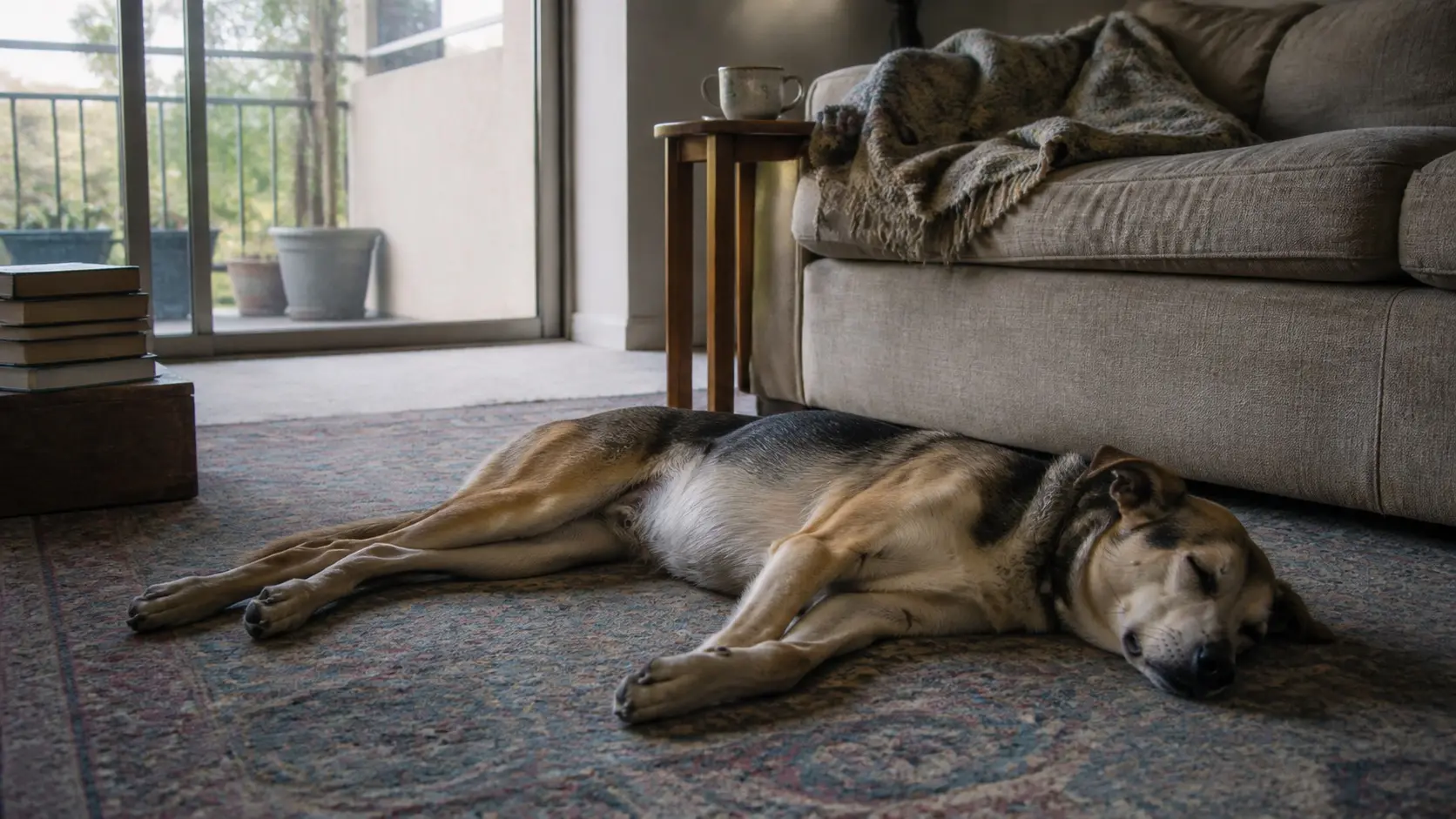
If you live in an apartment, leaving town with a dog is a different problem than it is for someone with a fenced backyard and a neighbor who can pop over. There's no side gate, no dog door, no "just let her out for ten minutes." Every potty break is a leash, a hallway, an elevator, and a walk. Which is exactly why apartment dog boarding tends to get researched more carefully — the fallback plans other people have simply don't exist.
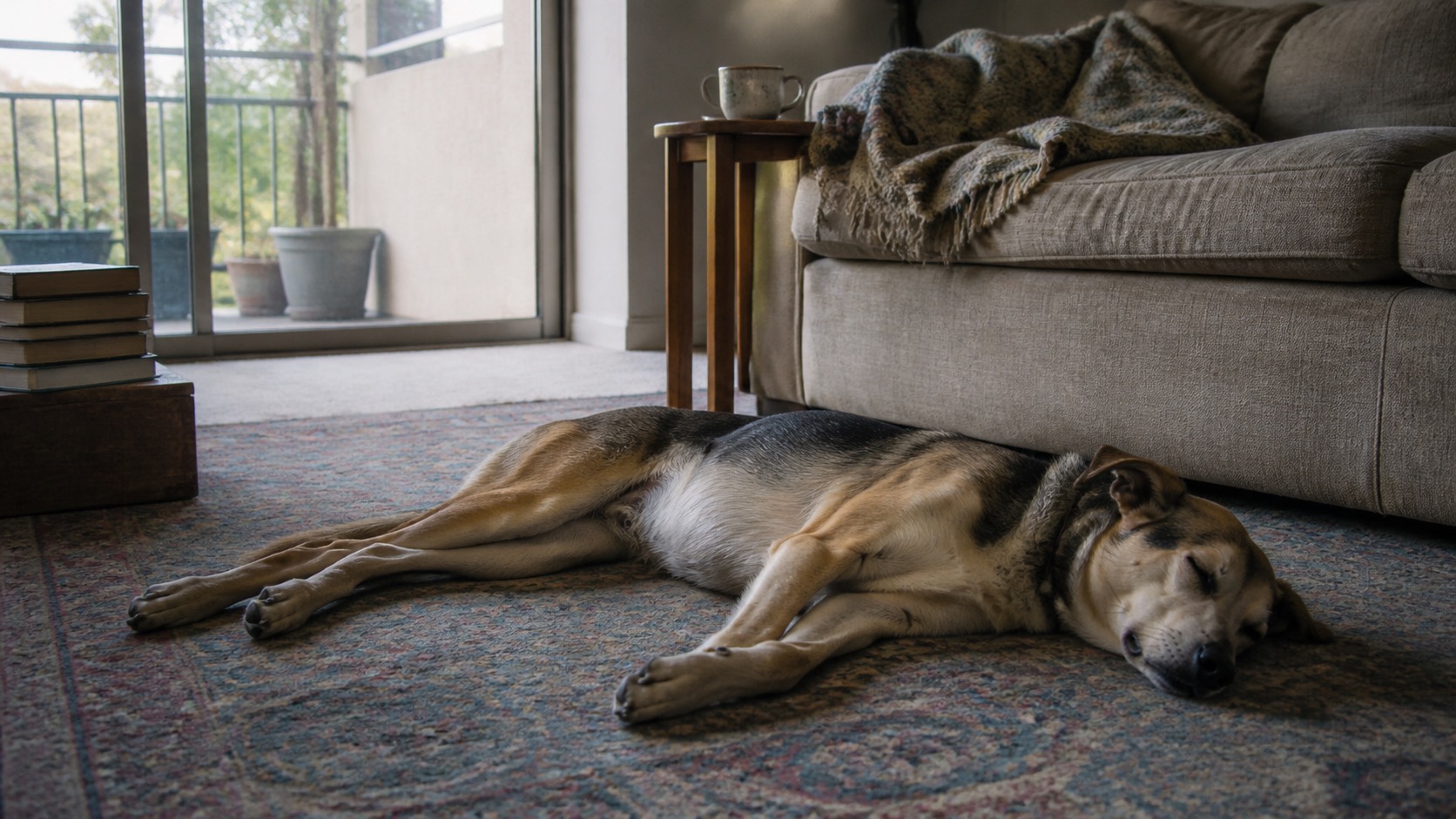
Orange County has a lot of these households. Irvine, Costa Mesa, Santa Ana, and the Great Park and Platinum Triangle corridors are dense with apartments and condos, plenty of them dog-friendly. This guide covers what actually changes when your dog is an apartment dog, what your options look like locally, and the questions worth asking before you book.
Why Apartment Living Changes the Boarding Question
Two separate things are going on, and it helps to keep them apart.
The logistics. With no yard and often no on-site person, external care isn't a preference — it's the only option. A dog who needs a midday break needs someone to physically show up, leash them, and take them outside. That's true whether you're gone for two nights or two weeks, and it's the main reason apartment households book professional care more often than single-family households do.
The dog's habits. An apartment dog has a specific set of learned routines, and most of them are invisible until they break:
- They relieve themselves on leash, on a schedule, usually on pavement or a designated grass strip — not on demand in an open yard.
- They're used to shared-space noise: neighbors through the wall, elevators, the parking structure, other dogs passing the door.
- Their exercise is walk-based and scheduled, not self-serve.
- They often have a precise potty window — the last one before bed, the first one at 6:30 AM — because there's no alternative.
None of this makes an apartment dog fragile. It makes them a dog whose routine is worth handing over accurately.
What Apartment Dog Boarding Options Look Like in Orange County
Search locally and you'll get four broadly different formats. They aren't ranked here — each fits different dogs and different trips.
Boarding facilities. Purpose-built runs or suites with rotating staff, structured feeding and play times, and long drop-off windows. Availability during holiday weeks is a real strength, and some facilities have wide-open play yards that an apartment dog rarely gets.
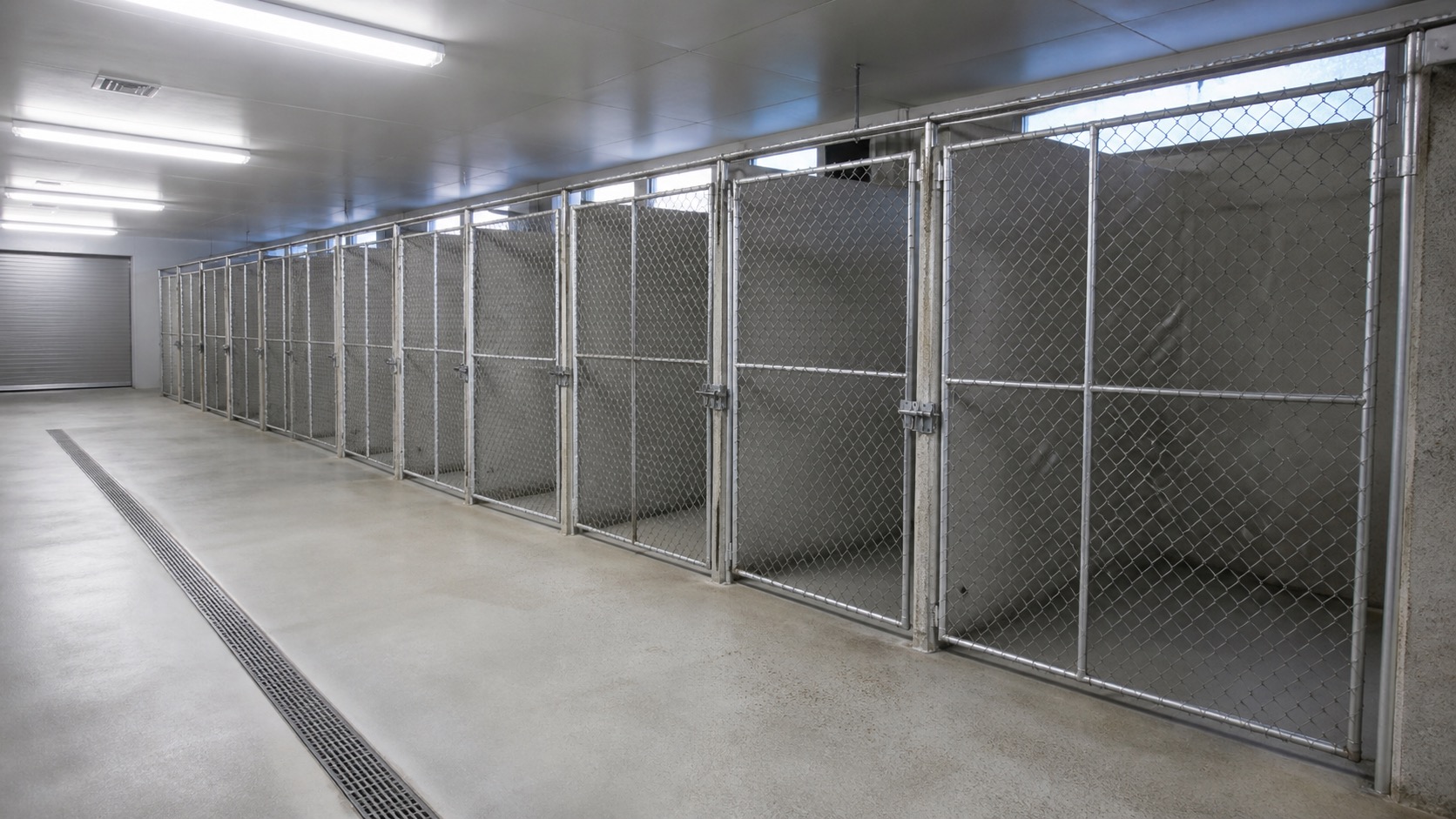
Veterinary boarding. Some clinics board alongside their medical practice. Genuinely useful for dogs with active health conditions or complex medication needs.
In-home boarding with independent sitters. Your dog stays in someone's home as a guest. The setting is closer to what an apartment dog already knows — a household, a couch, a person moving around — though the specific home varies a lot from one sitter to the next.
A sitter who comes to you. Drop-in visits or house-sitting in your own unit. Worth checking your lease and HOA rules first; some Orange County buildings have guest-access, key-fob, or parking requirements that make this harder than it sounds.
Cost overlaps heavily across all four, and the advertised nightly rate rarely reflects the real total for your dates. We break the local numbers down in our guide to dog boarding costs in Orange County, and compare the two most common formats head-to-head in kennel vs. in-home boarding.
The "Big Yard" Assumption Worth Questioning
It's tempting to treat a large fenced yard as an automatic upgrade for an apartment dog. Sometimes it is. Often it's just different.
A dog who has only ever gone potty on a leash, on concrete, may not immediately understand that grass in an unfamiliar yard is now the bathroom. Some figure it out in an hour. Others hold it uncomfortably long, or have an accident indoors and get labeled as having "regressed" when they were only confused. The same goes in reverse — a dog used to open space can find a third-floor walk-up genuinely limiting.
What matters isn't yard versus no yard. It's whether the new environment is close enough to what your dog knows that the first 24 hours aren't a puzzle. That's an honest comparison to make, not a box to check.
What to Tell a Sitter or Facility About an Apartment Dog
This is where apartment households have an advantage: your dog's routine is unusually well-documented, because you live it four times a day. Write it down and hand it over.
- Potty schedule with actual times, including the last break before bed and the first one in the morning.
- Surface preference — pavement, mulch, a specific grass strip. Say so plainly.
- The leash setup that works: harness or collar, front-clip or back, how they behave in a doorway or elevator.
- Noise tolerance — do they bark at hallway footsteps? Sleep through a leaf blower? Both are useful to know.
- Their signal for needing out, which in an apartment is often subtle: standing by the door, a specific stare, pacing.
- Food, measured per meal, and any medication in writing.
- Stairs, if your dog is a senior or has joint issues. A ground-floor unit and a two-story home are different asks.
Our pre-boarding checklist covers the rest of the handoff in more detail.
Comparing Home Environments, Not Just Availability
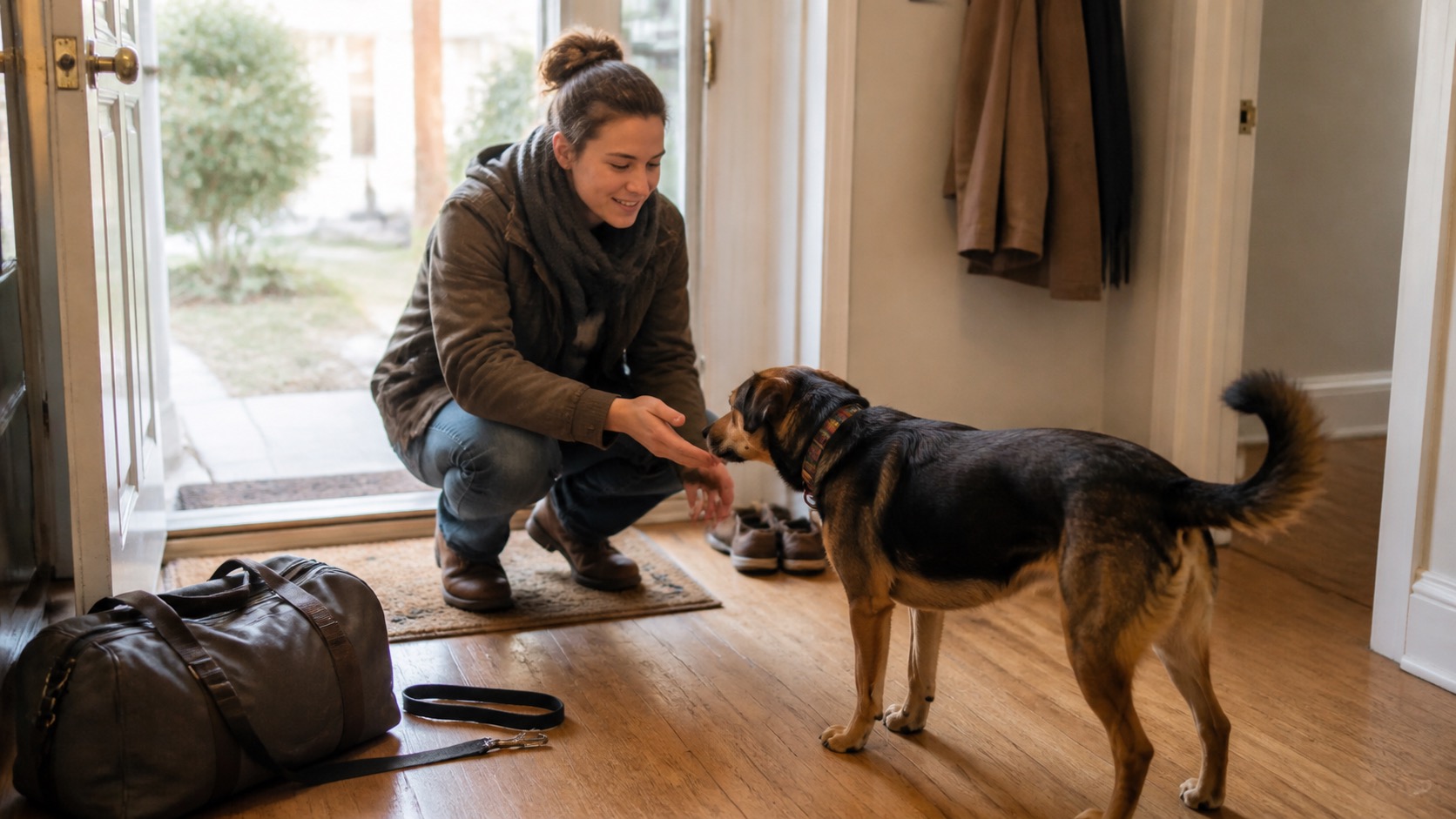
Most people booking apartment dog boarding end up choosing between two things: a facility, or an independent sitter they found and screened entirely on their own. There's a third path — a curated marketplace — and it exists because the second option puts all the comparison work on you.
The Blue Sock is a curated marketplace of independent sitters across Orange County. Sitters apply to join and are expected to meet minimum experience expectations before being accepted, and all independent sitters complete a professional third-party background check before joining the platform. The point isn't only to find someone available for your dates — it's to let pet parents compare the differences that actually matter for a dog like yours:
- Home Environment details on each profile, so you can see how a given household is set up before you book rather than guessing from one photo.
- Care Style and Key Skills, which distinguish a busier, more social home from a quieter, lower-stimulation one.
- Backgrounds and specialties that profiles can highlight — Vet Assistant, Professional Dog Trainer, Senior Dog Specialist, Medication Administration, Special Needs — because not all pet-care experience is the same.
- Verified badges and transparent reviews from real stays.
- Premium Experiences — optional enrichments like Sniffari Nature Walks or Pup Cup & Treat Outings. Offerings vary by sitter, and you choose which, if any, suit your dog.
Booking is request-based: you browse sitter profiles, send a request with your dates and your dog's details, and the sitter confirms. A meet & greet — video or in person — commonly happens before a first stay, which is the natural moment to walk through your dog's potty schedule and leash routine. Everything after that lives in the Pet Parent Portal: messaging, stay details, and secure payment, with no cash hand-off.
Many platforms make it easy to find a sitter. The harder problem is finding the right one — and for an apartment dog, "right" usually means an environment that doesn't ask them to relearn the basics on day one.
Frequently Asked Questions
Q: Is apartment dog boarding more expensive than boarding a dog from a house? A: No — rates are set by the provider and your dates, not by where your dog lives. What can add up is frequency: apartment households often need care for shorter trips too, since there's no yard or on-site fallback. Compare full quotes including extra walks, extended-care hours, and holiday pricing.
Q: My dog only goes potty on leash. Will that be a problem? A: It's common and easy to work around, as long as you say so up front. Mention the surface they prefer and their usual schedule. Trouble mostly comes from the assumption that a dog will "just use the yard," so head that off in the meet & greet.
Q: Can a sitter stay in my apartment instead? A: Sometimes, but check your lease, HOA, and building access rules first — guest registration, key fobs, and parking are the usual sticking points in Orange County buildings. Ask your provider directly whether they offer in-your-home stays.
Q: How far in advance should I book? A: In-home boarding in Orange County commonly books out two to three weeks ahead, and further around major holiday weekends. If your dates are fixed, start early.
Finding the Right Fit for Your Dog
Not having a yard isn't a disadvantage when you're arranging care — it just means the details of your dog's routine are the thing to get right. The environment that suits them depends on their age, energy, noise tolerance, medical needs, and how attached they are to the rhythm they already know. If you're in Irvine specifically, our guide to private dog boarding in Irvine goes deeper on what to expect locally.
Don't choose a sitter. Choose an experience. Browse sitters near you on The Blue Sock and compare Home Environments, Care Styles, and specialties side by side before you book.
You Might Also Like
 9 min
9 minAug 1, 2026
Dog Kennels Near Me: What Orange County Pet Parents Should Compare in 2026
Searching "dog kennels near me" in Orange County? Here's what actually shows up in those results, how the options differ, and the questions worth asking before you book.
Read More → 10 min
Jun 23, 2026
How Much Does Dog Boarding Cost in Orange County? A 2026 Pricing Guide
Wondering about dog boarding cost in Orange County? Here's what pet parents actually pay in 2026 — in-home vs. kennel pricing, what drives the price, and how to compare rates and book the right sitter.
Read More → 15 min
May 16, 2026
The Ultimate Guide to Dog Boarding in Irvine, CA (2026 Edition)
Looking for dog boarding in Irvine, CA? This guide compares your three options — kennels, independent sitters, and curated Blue Sock sitters — with what to ask, how pricing works, and how to find the right fit for your dog.
Read More →