
Crate-Free Dog Boarding vs. Crate-Trained Stays: What's Best for Your Dog in Orange County?
By The Blue Sock10 min read
- 1.What "Crate-Free Dog Boarding" Actually Means
- 2.When a Crate Helps a Dog During a Stay
- 3.There Is No "Right" Answer, Only the Right Match for Your Dog
- 4.Questions to Ask Any Provider, Crate-Free or Not
- 5.How to Hand Off Your Dog's Sleep Routine
- 6.How The Blue Sock Helps You Compare Sleeping Arrangements
- 7.Frequently Asked Questions
- 8.Find a Sitter Whose Home Fits How Your Dog Sleeps
"Crate-free dog boarding" is one of the most searched phrases in pet care and one of the least defined. Some pet parents want it because their dog has never spent a night in a crate. Others are nervous about it because their dog sleeps better in one. Both instincts are reasonable, and neither tells you much until you know what a specific provider in Orange County means by the words.
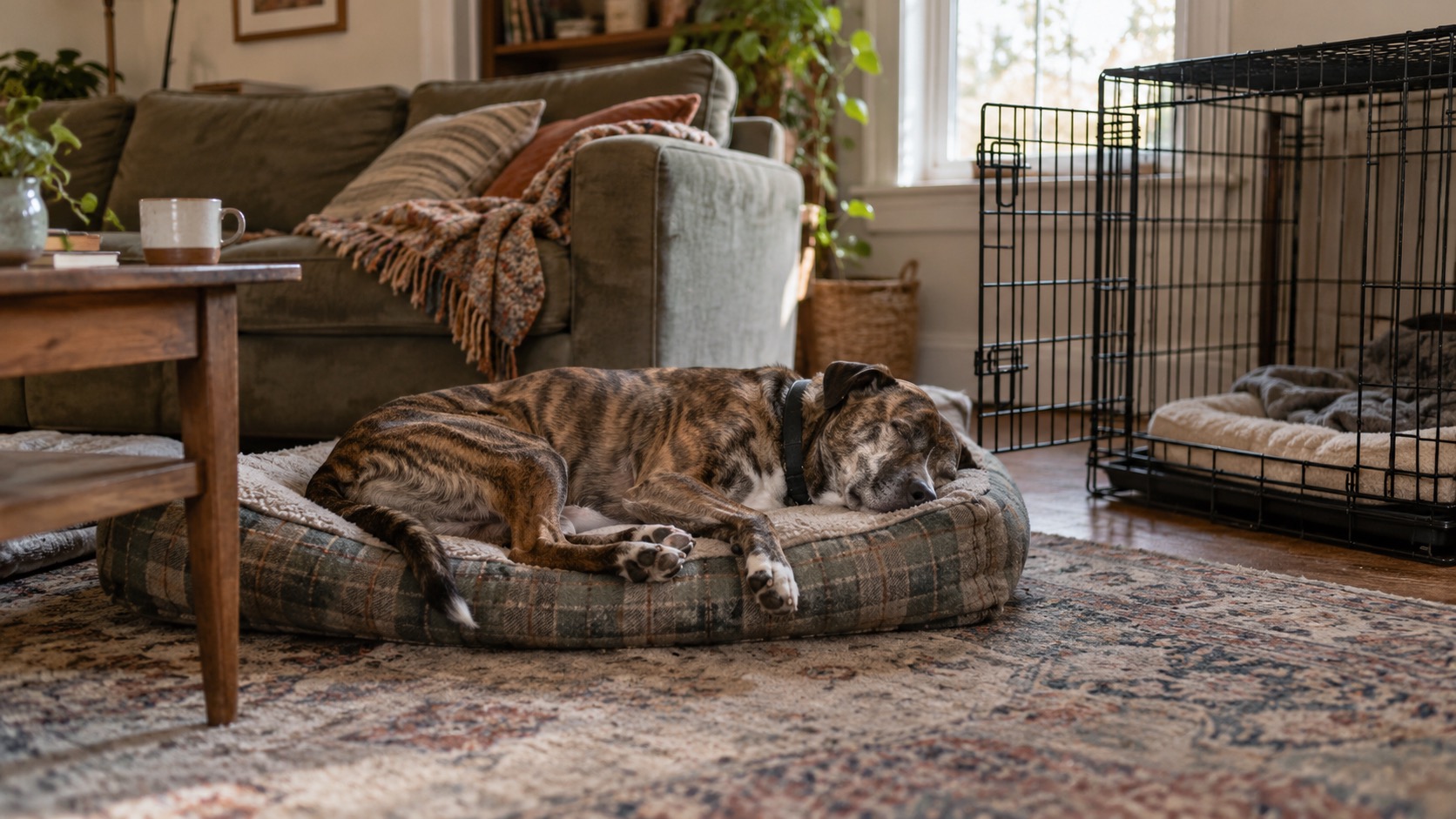
This guide covers what crate-free actually promises, when a crate helps during a stay, the hour limits worth knowing, and how to hand off your dog's sleep routine so the first night away looks like home.
What "Crate-Free Dog Boarding" Actually Means
There is no industry standard behind the phrase. "Crate-free" or "cage-free" usually means a provider doesn't house dogs in individual crates or kennel runs by default. It says nothing about three things that matter more:
- Where your dog sleeps. A dog bed in the sitter's bedroom, a shared open room with several guest dogs, and a suite with a door are all "crate-free," and they are very different nights.
- Whether your dog is ever confined. Many crate-free homes and facilities still separate dogs for meals, rest, or when someone leaves the house. Ask what that looks like, for how long, and where.
- Who is there overnight. Whether a commercial facility has a person on-site through the night varies by facility and is rarely stated on a website. With in-home boarding, the sitter typically lives there, which is why crate-free is easier to deliver in a home than in a building with thirty runs.
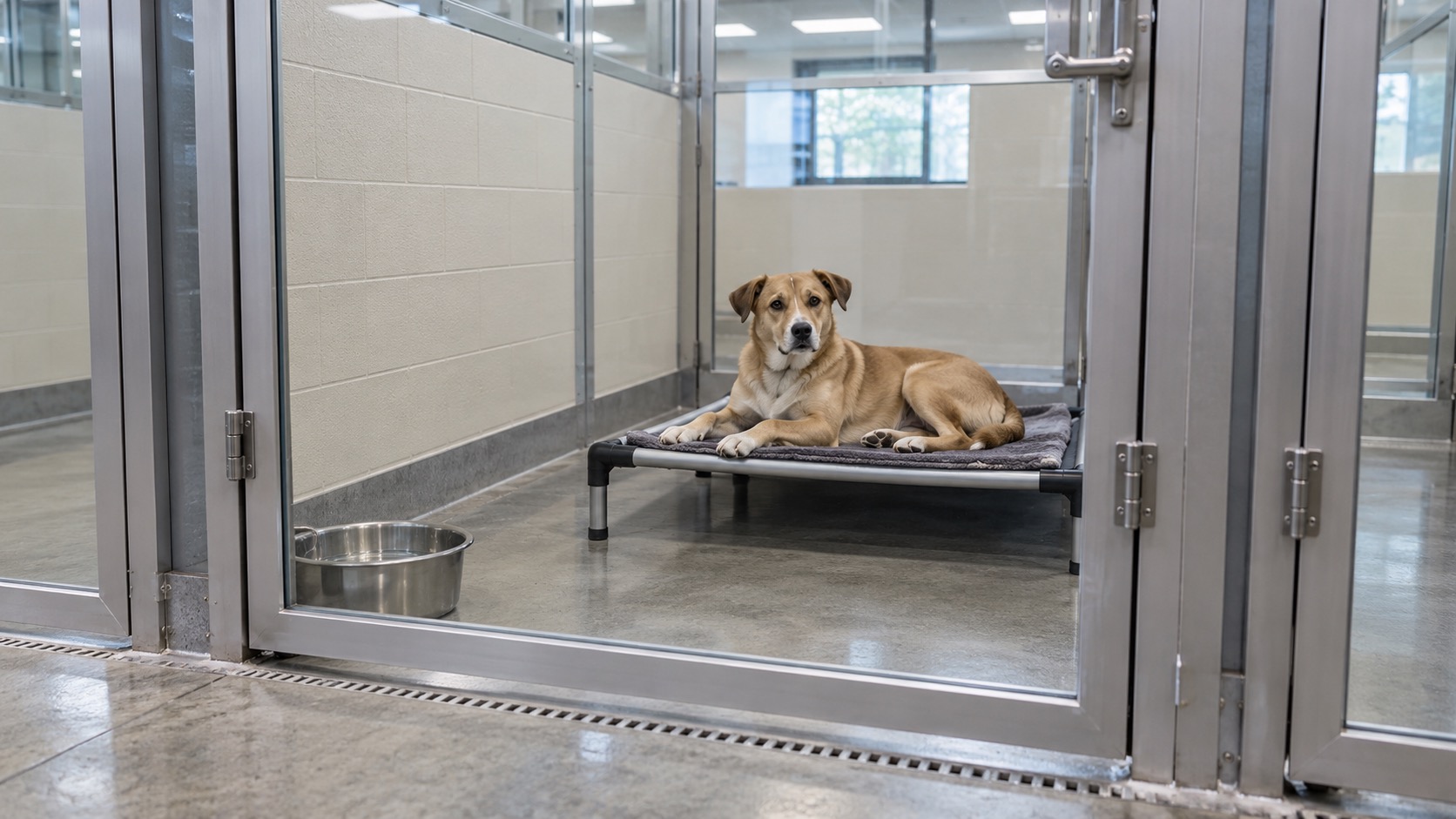
The failure mode is worth saying out loud: a crate-free setup with no separation plan is how two unfamiliar dogs end up in a scuffle at 2 a.m. over a chew. A good crate-free provider can tell you exactly how dogs are separated at night, at mealtimes, and when a new dog arrives. If the answer is "they all just get along," keep asking.
When a Crate Helps a Dog During a Stay
For a dog who was crate-trained at home, a crate is not a cage. It is the one piece of the house that travels, and a dog who sleeps in one every night often rests better in that crate in a new home than loose in a strange room.
A few numbers from Humane World for Animals' crate-training guidance (formerly the Humane Society of the United States) belong in any conversation with a provider:
- Adult dogs "shouldn't be left in a crate for more than 4-5 hours during the day."
- Puppies under 6 months "shouldn't stay in a crate for more than three or four hours at a time," with a general rule of no longer than their age in months plus one hour.
- Sizing: the crate "should be large enough for your dog to stand up and turn around in."
- Never as punishment. A crate "should never be used for punishment," because that teaches the dog to fear the one place meant to feel safe.
Those limits describe daytime confinement, not overnight sleep. The number to pin down with a provider is how many hours of a typical 24-hour day your dog would spend inside a crate.
The other side is a dog who has never been crated. The same guidance notes that a dog with separation anxiety "may get injured in an attempt to escape" a crate, and that for some dogs "crates won't be an option." A first-ever crate, in a new house, with a stranger, is the worst moment to find out which kind of dog you have. The hangover follows the dog home, too: dogs crated for long stretches under stress sometimes start resisting a crate they used to love, as our guide to keeping your dog's training intact during boarding explains.
There Is No "Right" Answer, Only the Right Match for Your Dog
It is tempting to sort this into a checklist, but the honest answer depends on your individual dog and what they are used to. Three common situations:
The dog who sleeps in a crate at home. The useful question is not "crate-free or not?" but "can my dog's crate come along, and will it be used the way we use it?" A stay that matches the home routine, door closed at bedtime and open the rest of the day, is usually the calmest option. Switching this dog to a crate-free stay is a change, not a kindness.
The dog who has never been crated. A crate-free home where the dog sleeps on a bed, a couch, or behind a baby gate is usually the closest match. If the provider still confines dogs at times, ask what they use instead (a gated room, an exercise pen, a dedicated dog space) and whether your dog can try it at a meet & greet first.
The "sometimes" dog. Plenty of dogs are crated only at night, only when nobody is home, or only as puppies. The handoff matters most here, because the sitter has to know which sometimes.
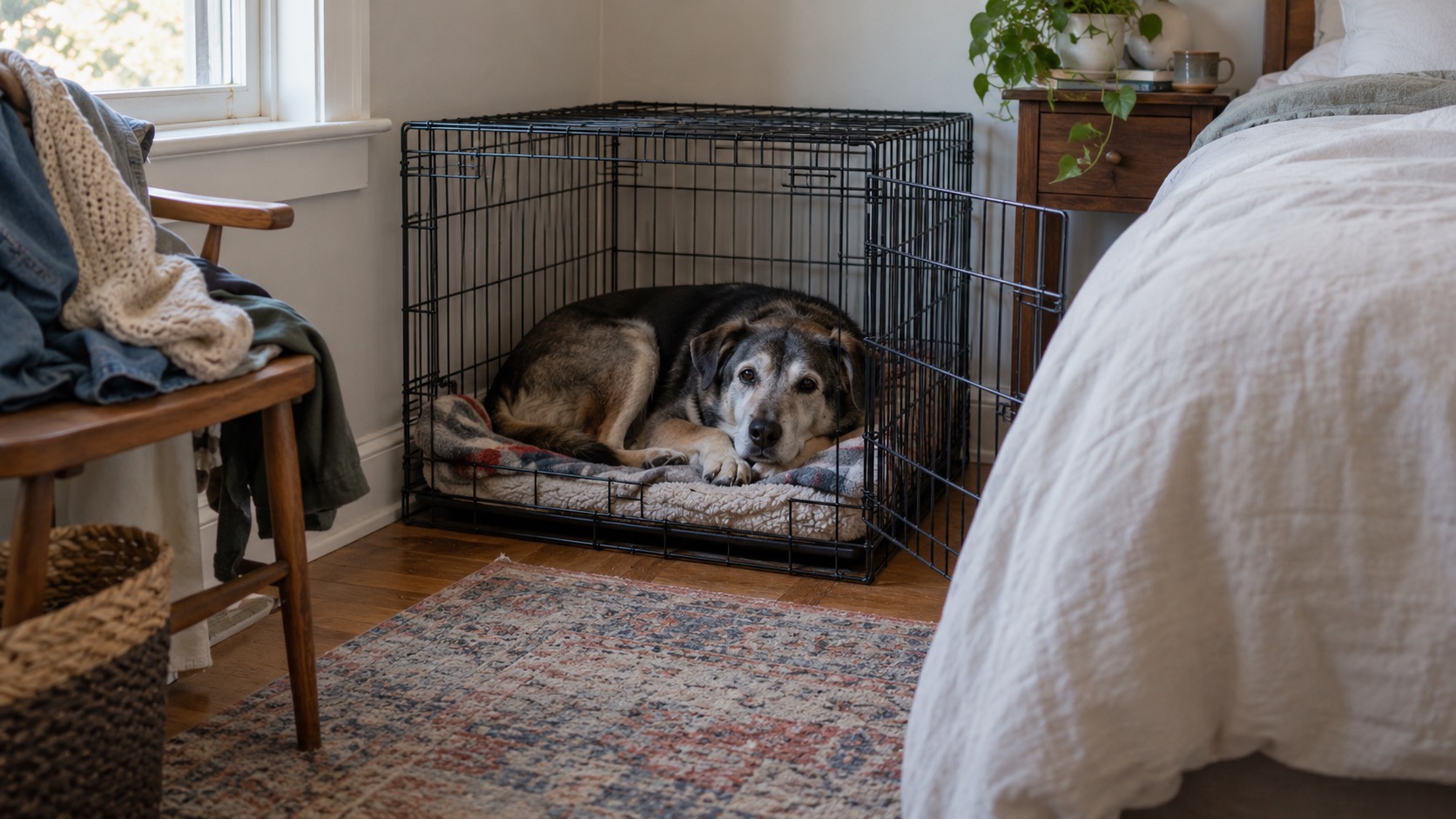
Age cuts both ways: a puppy's first boarding goes better when crate structure carries over, while a senior with stiff joints may need more room, a thicker bed, and no crate at all.
Questions to Ask Any Provider, Crate-Free or Not
These apply to kennels, cage-free facilities, and in-home sitters alike. Specific answers are a good sign; vague ones are the real answer.
- Where exactly will my dog sleep, and who else will be in that room?
- Is my dog ever confined during the day? For roughly how many hours, and in what?
- If my dog uses a crate at home, can I bring it, and will you follow our routine?
- How are guest dogs separated for meals, for rest, and when a new dog arrives?
- Is anyone physically present overnight?
- What happens if my dog won't settle on the first night?
The last one is the tell. A provider who has handled a restless first night can describe what they do: a familiar blanket, a quieter room, a late walk, a crate door left open. For what the night itself should look like, see what to know about overnight dog sitters.
How to Hand Off Your Dog's Sleep Routine
The gap between a good stay and a rough one is usually information the owner had and the caregiver didn't. Write down where your dog sleeps at home; when the crate is used and when it isn't ("only at night, door open during the day" is a plan, "crate-trained" is not); the settling cues your dog knows, such as a blanket, a chew, or a word; and the early signs of trouble, like pacing, panting, or refusing a crate they normally walk into.
Bring the crate if the sitter has room, along with bedding that smells like home; our boarding packing list covers the rest. Then test the setup at the meet & greet: let your dog see the sleeping spot, and if a crate will be used, have the sitter open and close it with your dog there. On a stay of two weeks or more, a sleep routine either holds or quietly falls apart by day six; our guide to long-term dog boarding in Orange County covers what to check on mid-stay.
How The Blue Sock Helps You Compare Sleeping Arrangements
Finding a sitter who says "crate-free" is easy. Finding one whose home matches how your dog actually sleeps is the harder part, and that comparison is what The Blue Sock is built for.
- Your dog's pet profile asks directly. A "Crate trained?" field (Yes, No, Sometimes) and a crate-notes box ("only at night, gets anxious, prefers open door") both go to the sitter with your booking request, not on a sticky note at drop-off. The profile also records sleeping habits (crate, dog bed, couch, human bed, or flexible), so the routine is written down before you book.
- Home Environment tags on Blue Sock sitter profiles show the setup before you ask: Dedicated dog room/space, Dogs welcome on beds, Solo stay available (no other dogs during visit), Other friendly dogs may be present, Quiet, low-traffic area.
- Care Style tags show how a sitter handles the moments that matter at night, including Always supervised (never left alone), Slow introductions with new dogs, and Respects each dog's boundaries. Sitters choose the tags that describe their own home, so they are a starting point for the meet & greet, not a guarantee.
- Booking is request-based. You describe your dog's routine, and the sitter decides whether their home is the right fit before confirming.
The Blue Sock is a curated marketplace: sitters apply to join, are expected to meet minimum experience requirements, and complete a professional third-party background check before joining. Blue Sock sitters generally care for smaller groups than commercial boarding facilities, which is why a sleep routine can be followed dog by dog rather than room by room. Still weighing a facility against a home? Kennel vs. in-home boarding lays out the broader trade-offs.
Frequently Asked Questions
Is crate-free dog boarding better than crating?
Neither is better on its own. A dog who sleeps in a crate at home often rests better with that routine carried over; a dog who has never been crated usually does better crate-free. What matters is whether the provider can match what your dog is used to and explain how dogs are separated when they need to be.
How long can a dog be crated during boarding?
Humane World for Animals' guidance is no more than four to five hours during the day for adult dogs, and three to four hours at a time for puppies under six months. Overnight sleep is a separate question, so ask how many hours of a typical day your dog would be crated.
Can I bring my dog's crate to a sitter's home?
Often, yes. Many in-home sitters welcome a familiar crate if they have the space, and it can be the fastest way to settle a crate-trained dog. Confirm space at the meet & greet and explain how the crate is used at home.
What if my dog has never been crated and the provider uses crates?
Ask what the alternative is: a gated room, an exercise pen, or a dedicated dog space. A dog with separation anxiety may try to escape a crate and get hurt, and a first-ever crate under stress is a poor setup for any dog. If there is no alternative, keep looking.
Find a Sitter Whose Home Fits How Your Dog Sleeps
The phrase on the listing matters less than three answers: where will my dog sleep, when would they be confined, and who is in the house at night. Write down your dog's routine, bring the crate or bed that smells like home, and test the setup at a meet & greet. Browse Blue Sock sitters and compare each home's sleeping arrangements against what your dog is used to.
You Might Also Like
 9 min
9 minOct 6, 2026
Boarding a Dog on Medication: How to Hand Off Pills, Insulin and Everything in Between
Boarding a dog on medication works when the handoff is written down. How to sort a regimen by difficulty, build a medication sheet a stranger can follow, and what to ask an Orange County sitter before you book.
Read More → 10 min
Sep 18, 2026
Vacation Dog Care: The Orange County Pet Parent's Planning Guide
Vacation dog care is easier when you plan the trip and the dog together. The real care formats, a week-by-week timeline, what to hand over, and what to expect while you're away — for Orange County pet parents.
Read More → 10 min
Sep 11, 2026
Dog Boarding Vaccine Requirements: What Your Dog Actually Needs Before a Stay
Dog boarding vaccine requirements come down to a short list — rabies, DHPP, Bordetella, and two worth a conversation with your vet. Here's what California law actually requires, and the four-week timeline that catches Orange County pet parents out.
Read More →