
Vacation Dog Care: The Orange County Pet Parent's Planning Guide
10 min read
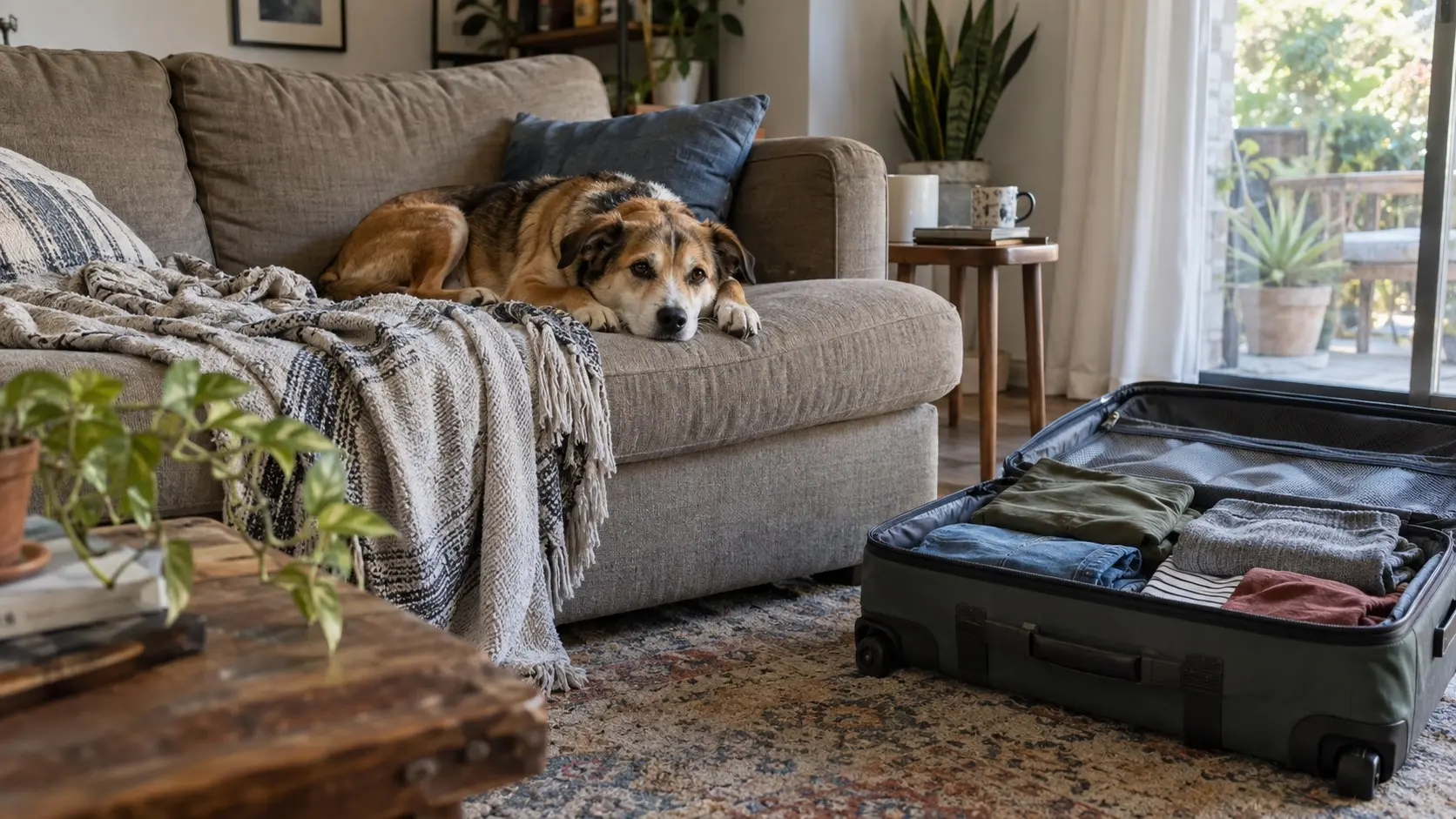
The flights are booked, the hotel is confirmed, and somewhere in the group chat someone asks the question nobody planned for: what are we doing about the dog? For most Orange County households, that's the moment vacation dog care stops being a vague intention and becomes an actual decision — usually with less time left than anyone would like.
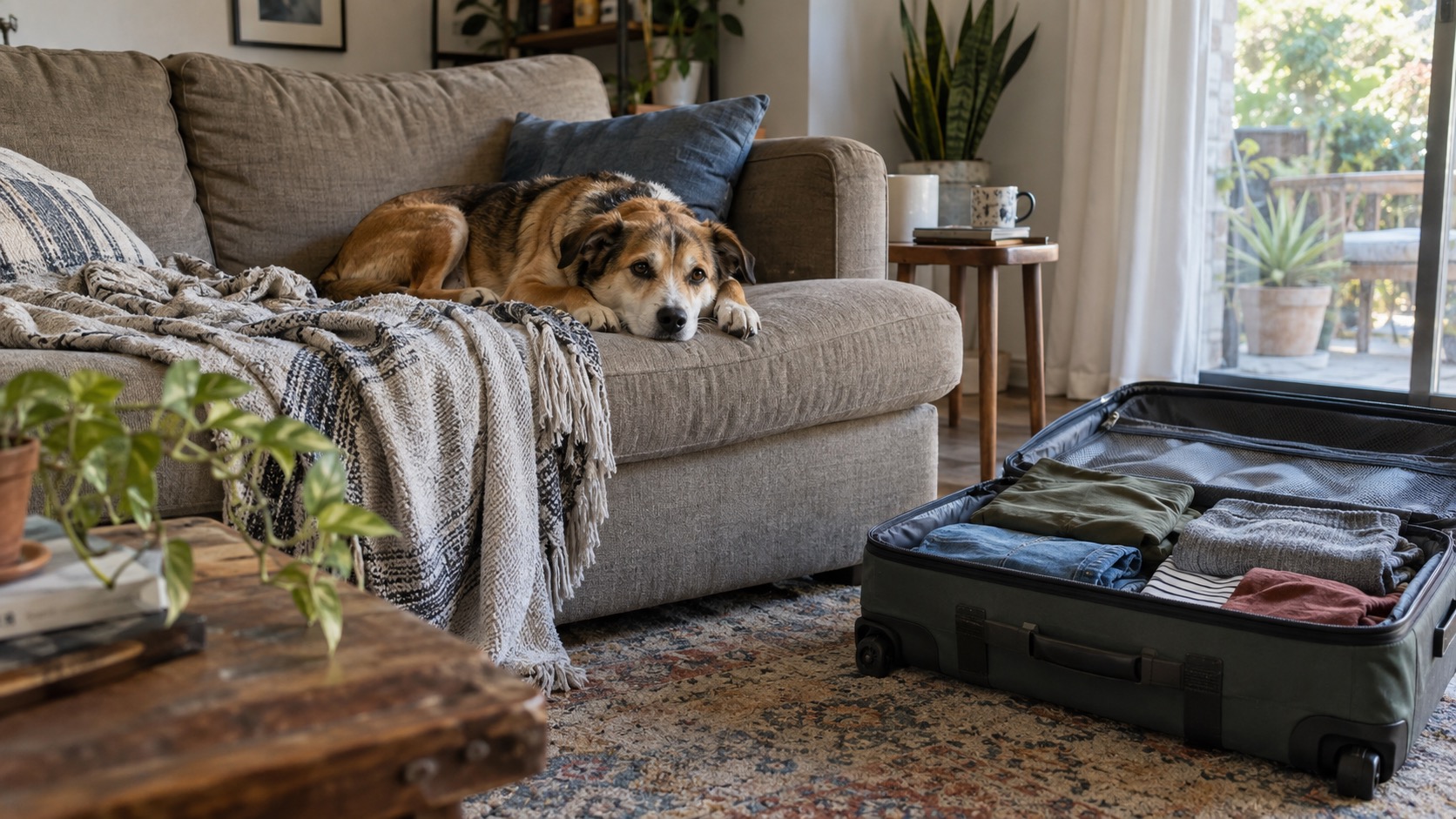
It's a planning problem more than a hard one. The parents happiest with how a trip went almost always did the same thing: they started from the shape of the trip, not from whichever option came up first in a search.
What "Vacation Dog Care" Actually Covers
The phrase covers four fairly different arrangements, and they aren't interchangeable.
Boarding at a commercial facility. Your dog stays at a dedicated business — kennels, "dog hotels", some veterinary practices. Staffing, group play, sleeping arrangements and what's included vary widely between them, so these are worth comparing individually rather than as a category.
In-home boarding with a sitter. Your dog stays in someone else's house and lives roughly like a guest — household routines, household noise, household floors. Group sizes are generally smaller than a facility's, though specifics depend on the individual sitter.
Care in your own home. A house sitter stays overnight, or someone does scheduled drop-in visits. Your dog keeps their own bed and yard; the trade-off is time alone between visits, which matters enormously to some dogs and barely at all to others.
Friends and family. Free, familiar, and right for some dogs — but worth being honest about. A relative who has never given a pill, can't leave work midday, or lives two freeways away in a crisis is a different level of coverage than a paid arrangement.
None of these is best in the abstract. What makes one right is the specific dog and the specific trip.
Start With the Trip, Not the Dog
Most people start by asking what their dog needs. That's the right question second — the trip narrows the field faster.
Length changes the math. A long weekend is survivable in almost any decent arrangement. Ten days is a different problem: a dog who's mildly unsettled on night two may be genuinely unsettled on night seven, and formats with more one-on-one attention tend to matter more as a stay gets longer.
How reachable you are matters more than people expect. Answering texts within the hour is very different from being asleep while your sitter is awake, or offline on a cruise. The further out of contact you'll be, the more the arrangement has to work without you — written instructions, someone locally authorized to approve veterinary care, and a provider who has already met your dog.
Time of year decides how early you book. Around Orange County, in-home care fills earliest from Thanksgiving through New Year's, plus spring break and peak summer weeks. If your trip lands on a holiday, book first rather than last. And if the household's usual dog person is coming with you, the plan has to survive without them — including whoever picks up if your flight home is cancelled.
The Vacation Dog Care Timeline
Working backwards from the departure date is the most useful habit here:
- Four to six weeks out — Start comparing and send booking requests, especially for a holiday or summer trip. Check whether vaccinations will still be current on your travel dates; our guide to dog boarding vaccine requirements covers what's commonly asked for and how far ahead boosters need to happen.
- Two to three weeks out — Confirm the booking and do a meet & greet if one hasn't happened. Refill medication now rather than the week you leave. If your dog has never boarded, this is the window for a short trial stay.
- One week out — Write the instructions down. Confirm your vet has authorization on file and knows someone else may bring your dog in. Check your emergency contact will actually be in town.
- Two or three days out — Keep the routine boringly normal. Dogs read suitcases, and a tense household adds to it.
- Drop-off day — Keep the goodbye short and matter-of-fact. Long, emotional farewells raise the temperature rather than lower it.
The step people compress is the first one. Everything else can be done quickly; finding the right fit can't.
What to Hand Over — and What Gets Forgotten
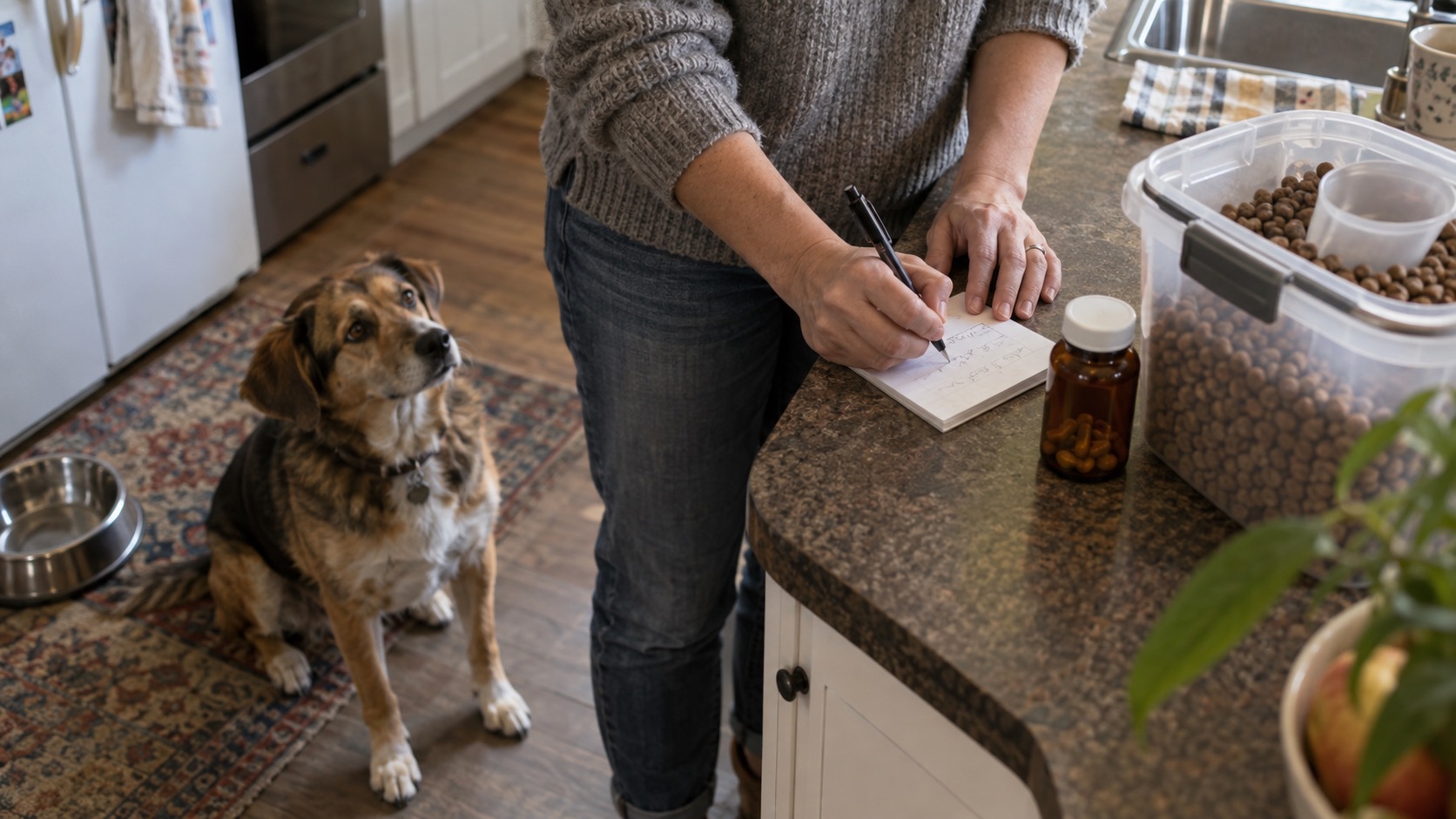
The handover is where a stay is quietly made or lost. Written beats verbal every time — nobody remembers a spoken instruction from nine days ago.
- Feeding in real units. "Two cups twice a day, 7 a.m. and 6 p.m., slow-feeder bowl" — not "the usual amount."
- Medication with names, doses and times, plus how your dog actually takes it. The pill-in-cheese trick is information.
- The routine that matters — when they go out, where they sleep, what they do when anxious, what they're not allowed to have.
- Your vet and the nearest 24-hour emergency hospital, with written authorization to treat and a spending threshold you're comfortable with, plus a local emergency contact who can physically show up. A relative in another state can't.
- Their own food and a familiar item. Switching food mid-trip is the most common cause of an upset stomach that gets blamed on stress.
- The honest version of your dog — resource guarding, leash reactivity, a talent for opening gates. Nobody is judging; everybody is planning.
Our pre-boarding checklist walks through the full handover. What gets forgotten most: the return date being wrong on the booking, and nobody knowing what happens if the flight home is delayed. Say it out loud before you leave.
While You're Away
Agree on communication before you go. A daily photo and a line about the day is a reasonable expectation — and setting it explicitly is the point, because an unanswered 11 p.m. text from a beach in Mexico has ruined more evenings than it needed to. More on that rhythm in transparent communication and daily updates. If you're eight hours ahead, pick a check-in window that works in both places.
Expect a slightly different dog for a day or two after you're home. Extra sleep, some clinginess, a quieter appetite — common, and usually settles fast. What isn't routine is a dog who seems genuinely shut down for more than a couple of days; why dogs come back stressed from boarding covers the difference and what it points to.
How The Blue Sock Helps You Compare Vacation Dog Care
Most platforms are built to help you find a sitter quickly. The Blue Sock is built to help you compare the experience before you commit — which matters more for a vacation than almost any other stay, because you won't be nearby to adjust if the fit is wrong.
Sitters are independent contractors who set their own rates, schedules, capacities and services, so what's offered varies between them. The marketplace makes those differences comparable side by side:
- Care Style, Home Environment and Key Skills sit next to each other on every profile. For a longer trip, the environment your dog actually lives in — household activity level, indoor space, outdoor access — is usually what decides how week two goes.
- Experience and specialties are surfaced up front — profiles can highlight backgrounds such as vet assistant experience, professional dog training, rescue work, senior dog specialization or medication administration. For a dog on daily medication while you're overseas, that distinction is the whole decision.
- All independent sitters complete a professional third-party background check before joining the platform, and sitters apply to a curated community rather than being listed automatically.
- Booking protection is built into every request — if a confirmed sitter has to cancel, the platform helps find another match, and if no replacement is available the booking is refunded. That's the specific fear that keeps people up before a trip.
- Booking is request-based, and a meet & greet — video or in person — commonly happens before a first stay, so you watch someone with your dog before either of you commits. The Pet Parent Portal then keeps the stay in one place: message your sitter and pay securely without a cash hand-off from another time zone.
- Optional premium experiences — sniffari nature walks, pup cup outings, splash playtime — vary by sitter, and can turn a long stay into something your dog enjoys rather than endures.
Every dog is different, and every sitter is different. Many platforms make it easy to find a sitter; The Blue Sock makes it easier to find the right one for the trip you're actually taking.
Frequently Asked Questions
Q: How far in advance should I book vacation dog care? A: Four to six weeks for an ordinary trip, earlier for holidays — Thanksgiving through New Year's, spring break and peak summer weeks fill first around Orange County. Booking early costs nothing and is the one step that can't be rushed later.
Q: Is it better to board my dog or have someone stay at my house? A: Neither is automatically better; it depends on the dog rather than a rule. A dog attached to their own space who tolerates alone time may do best at home; one who struggles with long stretches alone often does better with company. Compare the arrangements in front of you — kennel vs. in-home boarding walks through the trade-offs.
Q: What does it cost in Orange County? A: It varies by provider, trip length, time of year and what's included. Independent sitters and facilities set their own rates and structure them differently, so confirm what a quoted rate covers. Our Orange County dog boarding cost guide breaks down how local pricing tends to work.
Q: My dog has never been away from me. Should I still travel? A: Usually yes — but test the separation first. A single overnight or short trial stay a few weeks out tells you far more than any amount of worrying, and leaves time to change the plan if the fit isn't right.
Plan the Trip, Then Plan the Stay
This goes wrong far more often from a rushed decision than from a bad option. Give yourself the four to six weeks, start from the shape of your trip, write the instructions down, and pick the arrangement that fits the dog you actually have.
Ready to see who fits your dog and your dates? Browse sitters near you on The Blue Sock and compare homes, care styles and experience before you book.
You Might Also Like
 5 min
5 minJul 18, 2026
Labor Day Dog Boarding in Orange County: Why Late-Summer Sitters Book Up Weeks Early
Labor Day weekend lands September 7 this year, and Labor Day dog boarding in Orange County fills up fast. Here's when Irvine, Costa Mesa, San Juan Capistrano, and Wildomar pet parents should reserve a sitter — and what to line up before a first stay.
Read More → 8 min
8 minJun 30, 2026
July 4th in Orange County: Where to Board Your Dog During Fireworks Season
July 4th is the single biggest day of the year for lost pets nationwide. Here's how Orange County pet parents in Irvine, Costa Mesa, San Juan Capistrano, and Wildomar can plan dog boarding around fireworks season — plus how to keep an anxious dog safe at home.
Read More → 10 min
Sep 11, 2026
Dog Boarding Vaccine Requirements: What Your Dog Actually Needs Before a Stay
Dog boarding vaccine requirements come down to a short list — rabies, DHPP, Bordetella, and two worth a conversation with your vet. Here's what California law actually requires, and the four-week timeline that catches Orange County pet parents out.
Read More →