
Large Dog Boarding in Orange County: What Big-Dog Parents Need to Know
10 min read
- 1.Where Size Limits Actually Come From
- 2.What Changes About a Stay When the Dog Is Big
- 3.The Big-Dog Assumptions That Send People Wrong
- 4.Questions Worth Asking Before You Book Large Dog Boarding
- 5.How The Blue Sock Helps Big-Dog Parents Compare
- 6.Frequently Asked Questions
- 7.Find a Sitter Who's Set Up for a Big Dog
Searching for large dog boarding is a different experience than searching for boarding generally. You read a listing, like what you see, then find the line near the bottom: under 25 lbs only. If you share a home with a shepherd mix, a lab, or a mastiff, that dead end is familiar — and it happens often enough around Orange County and the Temecula Valley that big-dog parents learn to check the fine print before they check the price.
It isn't arbitrary, though. Size limits exist for real reasons, and understanding them makes it much easier to find care that genuinely works instead of care that technically says yes.
Where Size Limits Actually Come From
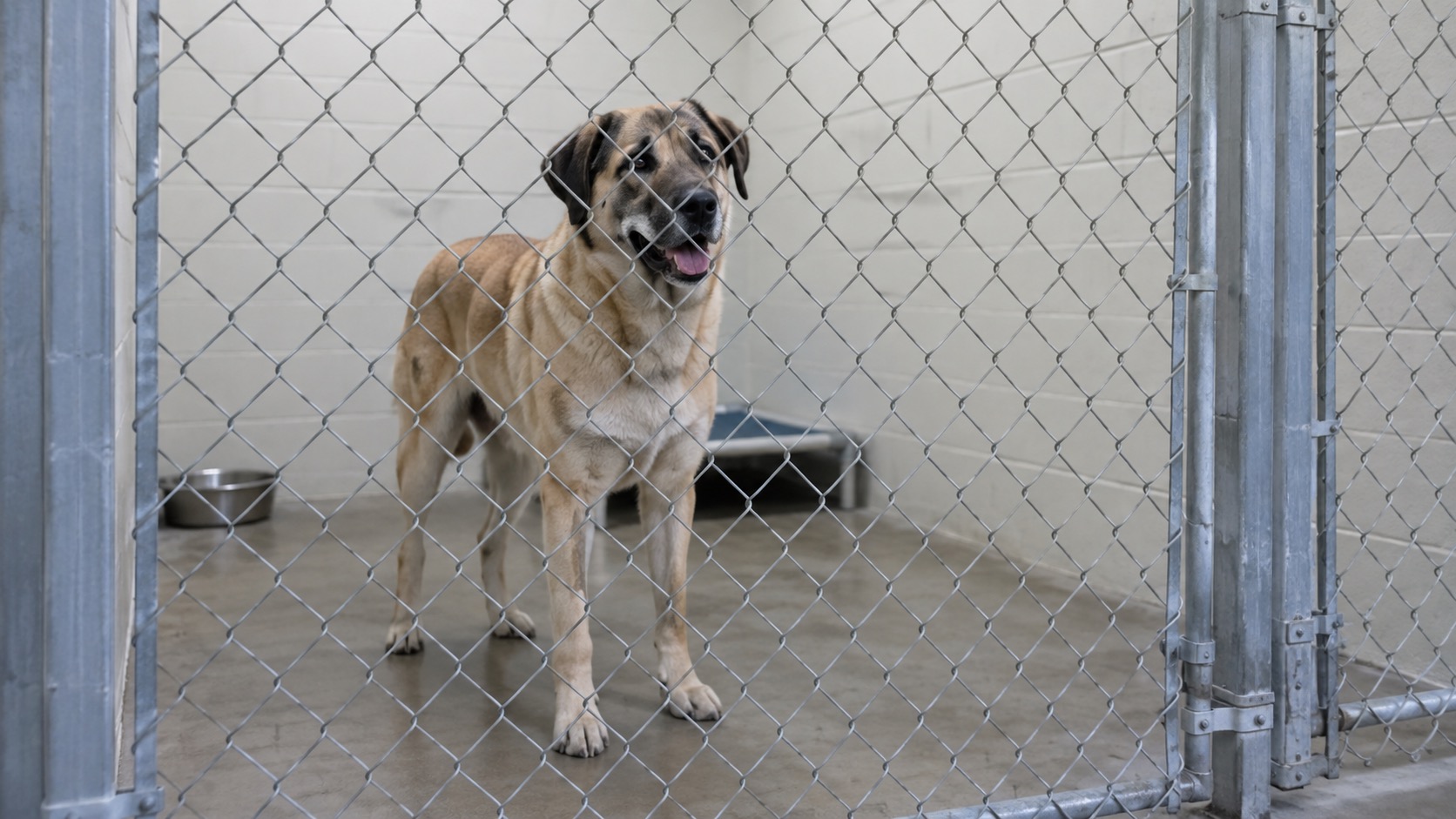
Weight caps aren't a judgment about big dogs. They're usually a consequence of how a particular setup is built.
Group play is the most common reason. Where dogs share space, the safest arrangement separates them by size and play style — a 12-pound dog and a 90-pound dog playing the same game are doing very different things physically. Some providers solve that by running multiple groups; others solve it by accepting one size band. Both are legitimate answers to the same problem.
Physical space sets a hard ceiling. A run, a crate, or a spare room has fixed dimensions, and a dog who can't stretch out to sleep is a genuine welfare problem. A provider with smaller spaces will cap by weight rather than squeeze.
Handling is a skill, not a preference. Walking a strong dog through a doorway, redirecting one who's spotted something outside, or lifting one who's injured takes practice and physical capability. Providers who haven't built it sensibly decline it.
The range is wider than people expect. Around Orange County you'll find programs that stop at 10 pounds, others that cap at 25, plenty with no cap at all, and some that specialize in exactly the large and giant breeds everyone else turned away. The Temecula Valley shows the same split. Size acceptance is provider-specific, so it belongs at the top of your filtering list rather than the bottom.
What Changes About a Stay When the Dog Is Big
Beyond getting in the door, a few things genuinely work differently for large and giant breeds — whichever format you choose.
Feeding and exercise timing carries more weight — literally. Deep-chested breeds such as Great Danes, standard poodles, Weimaraners, Dobermans and setters carry elevated risk of gastric dilatation-volvulus, commonly called bloat: a life-threatening emergency in which the stomach distends and twists. Standard veterinary guidance is smaller, more frequent meals, slowing fast eaters, and waiting one to two hours after a meal before vigorous activity. For a higher-risk dog, that sequence needs to be written down and handed over, not mentioned in passing.
Joints and surfaces matter more. Large breeds are over-represented in hip and elbow issues, and giant breeds age faster — a seven-year-old Dane is far more senior than a seven-year-old terrier. Slick tile is harder on a big dog, and stairs come up more often.
Heat is a bigger deal here than in most of the country. An Orange County September afternoon is not a walking window for a heavy-coated 90-pound dog. Care that adapts to the weather instead of following a fixed schedule matters more for large dogs; our guide to summer heat safety for Orange County dogs covers the local specifics.
A big dog's stress is louder. An anxious 15-pound dog paces. An anxious 90-pound dog can pull a leash out of a hand or lean through a gate. The feeling is the same; the consequences of missing it early are not — worth reading alongside why dogs come back stressed from boarding.
The Big-Dog Assumptions That Send People Wrong
A few beliefs get repeated so often about large dog boarding that they're worth naming directly.
"A big dog needs a big yard." Yard size is one variable among several, and not the one that predicts a good stay. Structure, exercise that actually happens, and a calm indoor environment matter more than square footage — we covered the same question from the other direction in apartment dog boarding in Orange County.
"Big dogs are too much for a home." No reliable rule sorts dogs into environments by size. Some large dogs are calmest in a quiet household, some are happiest with a structured facility day, and some need one-on-one attention neither format automatically provides. What predicts fit is the individual dog — energy, temperament, medical needs, how they handle new places — not the number on the scale.
"Any provider who takes big dogs will be fine." Accepting large dogs and being set up for them are different things. A provider might say yes and still have no plan for a strong leash-puller, a slick floor, or a bloat-risk feeding schedule.
"It'll cost more because they're big." Sometimes, sometimes not. Independent sitters and facilities set their own rates and structure them differently — by size, by night, or by what's included. Confirm rather than assume; the Orange County dog boarding cost guide walks through how local pricing breaks down.
Questions Worth Asking Before You Book Large Dog Boarding
Once you've filtered for size acceptance, these are the questions that separate providers. They apply equally to a facility and an independent sitter.
- What's the largest dog you currently care for, and how often? More useful than a stated weight limit — it tells you what's routine rather than what's permitted.
- Where will my dog sleep, and how big is that space? Ask for the actual arrangement, not the category.
- How are dogs grouped, if they're grouped at all? If there's shared play, ask how size and play style factor in. If there isn't, ask what solo enrichment looks like.
- Who handles my dog on leash, and are they comfortable with a dog this strong? A direct question that gets a direct answer.
- How would you handle feeding and exercise timing? Essential for a bloat-risk breed. Ask how it would be documented.
- What happens if my dog doesn't settle? The most revealing question on the list, at any size.
- Can I bring their own food, bed and medication? Continuity matters more for a dog whose digestion is already sensitive. Our pre-boarding checklist covers what's worth handing over.
How The Blue Sock Helps Big-Dog Parents Compare
Most platforms are built to help you find a sitter quickly. The Blue Sock is built to help you compare the experience first — exactly the part that's hardest when your dog is large.
Sitters on the platform are independent contractors who set their own rates, schedules, capacities and the sizes of dog they take, so what's on offer varies from one to the next. What the marketplace does is make those differences visible side by side instead of buried in fine print:
- Home Environment is a comparison field, not a paragraph you have to decode. Flooring, indoor space, outdoor access and household activity level are what decide whether a big dog is comfortable, and they sit where you can compare them.
- Care Style and Key Skills sit right next to it. If your dog needs a quieter, more structured setup — or a lot more physical outlet than average — you can see who describes their care that way.
- Experience and specialties are surfaced up front. Profiles can highlight backgrounds such as vet assistant experience, professional dog training, rescue work, senior dog specialization or medication administration. Not all pet-care experience is the same, and for a strong or medically complex dog that distinction is the whole decision.
- Booking is request-based, and a meet & greet — video or in person — commonly happens before a first stay. For a large dog that's genuinely useful: you watch someone handle your dog before anyone commits.
- Blue Sock sitters generally care for smaller groups than commercial boarding facilities, which is often what a big dog who finds crowded play overwhelming actually needs. Optional premium experiences such as Sniffari nature walks vary by sitter, and several suit a high-output dog well.
Every dog is different, and every sitter is different. Many platforms make it easy to find a sitter; The Blue Sock makes it easier to find the right one — including one genuinely set up for a dog your dog's size.
Frequently Asked Questions
Q: Why do so many dog boarding places have weight limits? A: Usually because of group play, physical space, or handling capability — not a judgment about big dogs. Where dogs share space, separating by size is safer, and a provider without multiple groups or larger sleeping spaces caps by weight instead. Limits vary enormously, so filter for size acceptance first.
Q: Is in-home boarding or a facility better for a large dog? A: Neither is automatically better, and size isn't what decides it. Some large dogs settle best in a quiet household; others do well with a structured facility day. Compare the environments in front of you against your dog's temperament, medical needs and history with new places — kennel vs. in-home boarding walks through the differences.
Q: Does large dog boarding cost more? A: It depends on the provider. Some price by dog size, some by nights, some by what's included. Independent sitters set their own rates, so confirm how a given rate is structured rather than assuming a size surcharge applies.
Q: My dog is a bloat-risk breed. What should I tell a sitter? A: Write it down rather than saying it: meal sizes and times, whether you use a slow-feeder bowl, how long to wait after eating before active exercise, and the emergency signs — unproductive retching, a distended belly, restlessness. Then ask where the nearest emergency vet is.
Find a Sitter Who's Set Up for a Big Dog
Large dog boarding isn't hard to find because big dogs are hard to care for. It's hard to find because size acceptance is buried at the bottom of listings — and because "we take large dogs" and "we're set up for large dogs" aren't the same sentence. Ready to compare the difference? Browse sitters near you on The Blue Sock and see whose home, experience and care style actually fit your dog.
You Might Also Like
 10 min
Sep 18, 2026
Vacation Dog Care: The Orange County Pet Parent's Planning Guide
Vacation dog care is easier when you plan the trip and the dog together. The real care formats, a week-by-week timeline, what to hand over, and what to expect while you're away — for Orange County pet parents.
Read More → 10 min
Sep 11, 2026
Dog Boarding Vaccine Requirements: What Your Dog Actually Needs Before a Stay
Dog boarding vaccine requirements come down to a short list — rabies, DHPP, Bordetella, and two worth a conversation with your vet. Here's what California law actually requires, and the four-week timeline that catches Orange County pet parents out.
Read More → 9 min
9 minAug 11, 2026
Apartment Dog Boarding in Orange County: What to Do When You Don't Have a Yard
Apartment dog boarding comes with its own questions — leash-only potty breaks, elevators, noise tolerance, and no yard to fall back on. Here's what Orange County pet parents should compare before booking.
Read More →