
Orange County Fire Season: The Pet Evacuation Plan to Make Before the Santa Ana Winds
10 min read
On the afternoon of September 9, 2024, Orange County Public Works crews were setting boulders along Trabuco Creek Road when their equipment threw a spark. The Airport Fire burned 23,526 acres across Orange and Riverside counties, destroyed 160 structures, and pushed evacuation orders out from Rancho Santa Margarita to the rural zones near Lake Elsinore. It was not a Santa Ana wind event. It was an ordinary hot September day. If you live anywhere in Orange County with a dog, that is the argument for building a pet evacuation plan now, in the quiet part of the season, rather than in the twenty minutes you'll actually have.
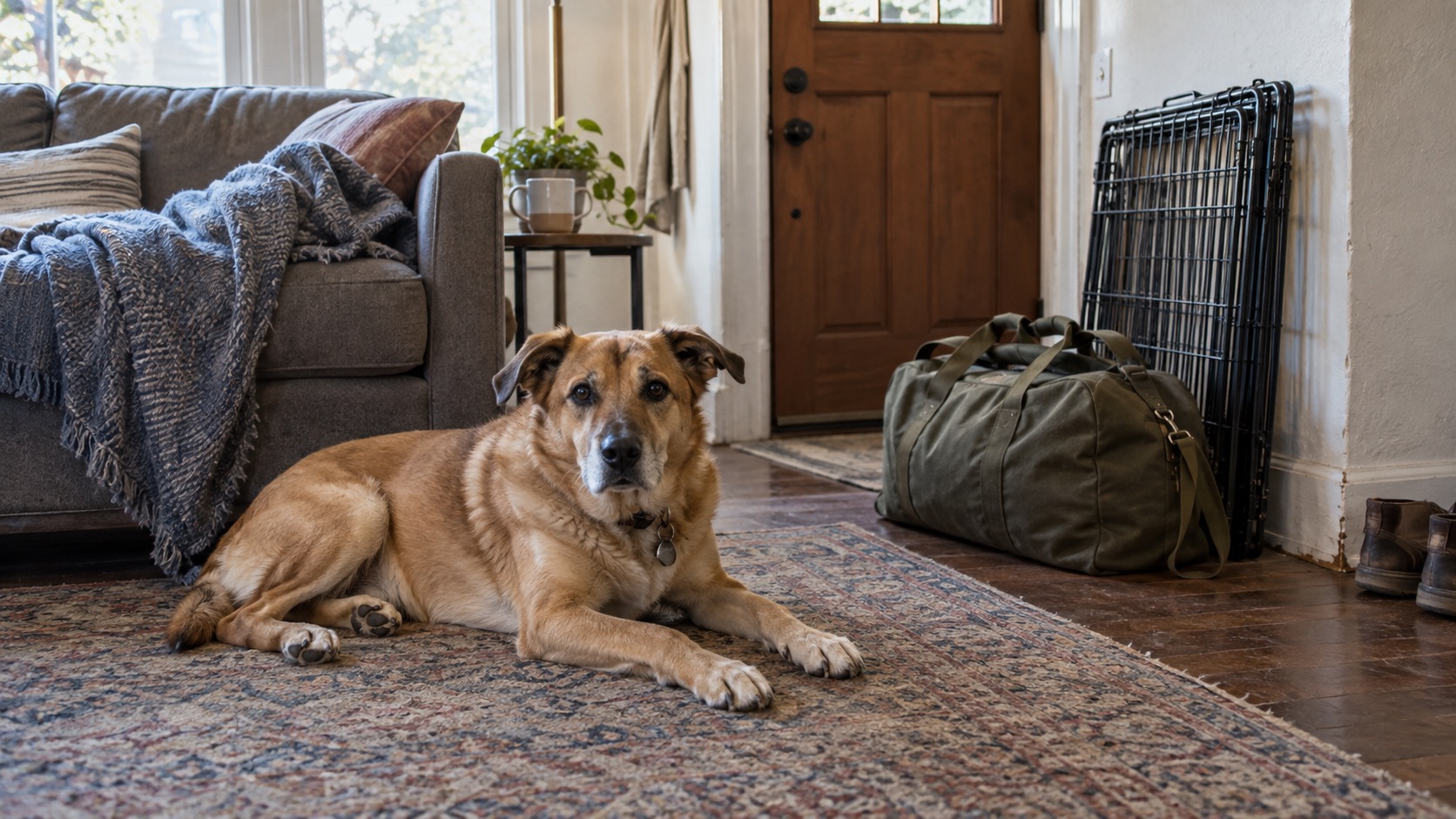
A pet evacuation plan is four things: a bag that's already packed, identification that actually resolves to your phone number, an alert that reaches you before a neighbor does, and a decided answer to where the dog goes. Each one takes an hour on a calm Tuesday and is impossible to assemble during an evacuation order.
Why September Starts the Clock in Orange County
Southern California's highest-risk fire months run from roughly September through December. September and early October bring heat and the driest fuel of the year; the Santa Ana winds that arrive later in the fall are what turn a spark into a fast-moving fire. The Silverado Fire in October 2020 ran on gusts reported near 80 mph.
The nuance that matters for planning is that those two things don't have to line up. The Airport Fire was a September ignition with no wind event behind it, and it still forced evacuations across two counties in under 48 hours. Waiting for a red flag warning before thinking about the dog means the plan gets made after the fire starts.
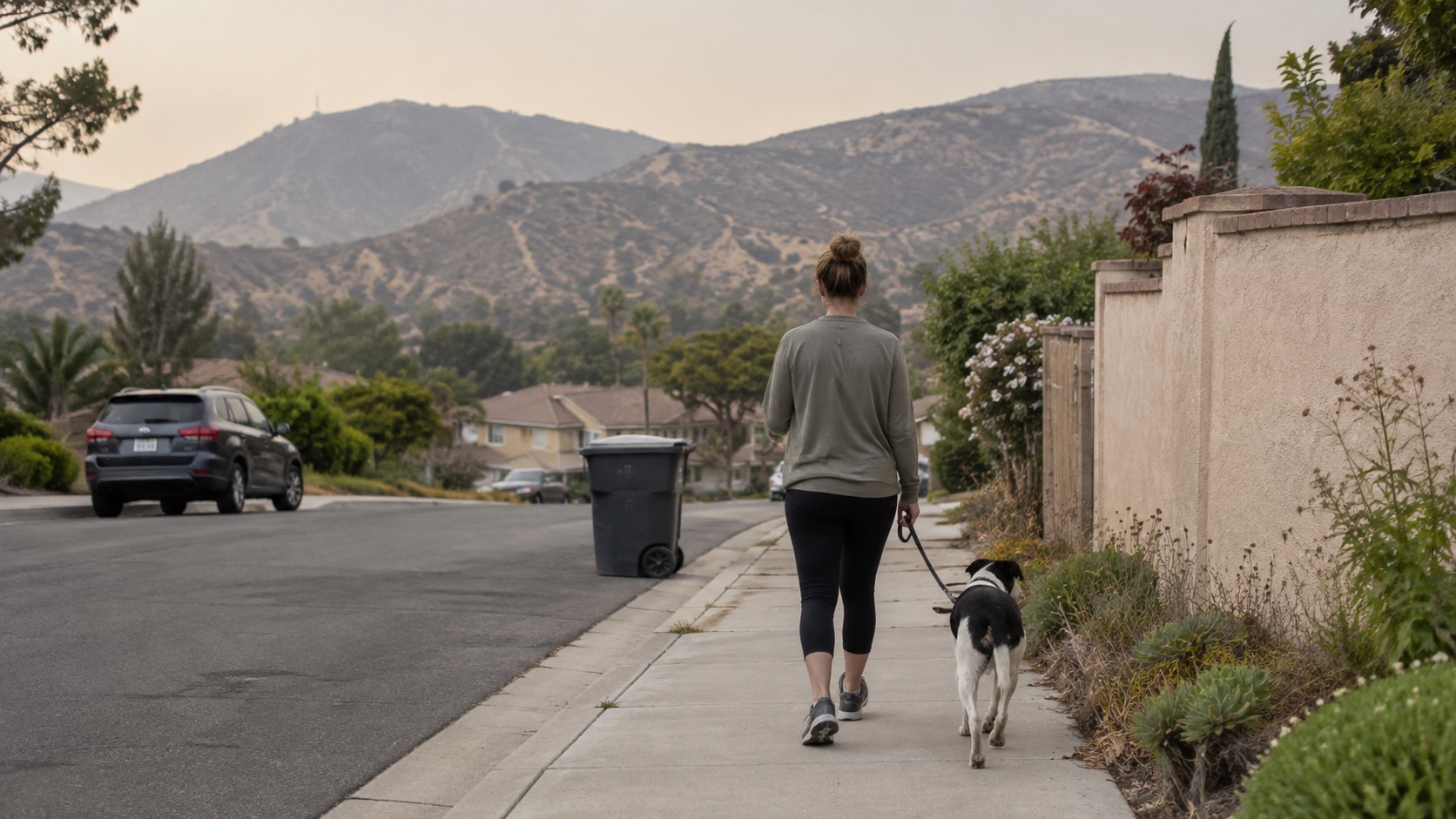
Geography matters less than people assume, too. Canyon-adjacent communities — Trabuco Canyon, Silverado, Modjeska, and the Lake Elsinore corridor near Wildomar — carry the direct evacuation risk, but smoke doesn't respect a wildland boundary. A foothill fire routinely drops air quality across Irvine, Tustin, and Costa Mesa, where the week's question becomes whether to walk the dog at all, not whether to leave.
What Goes in a Dog's Go Bag
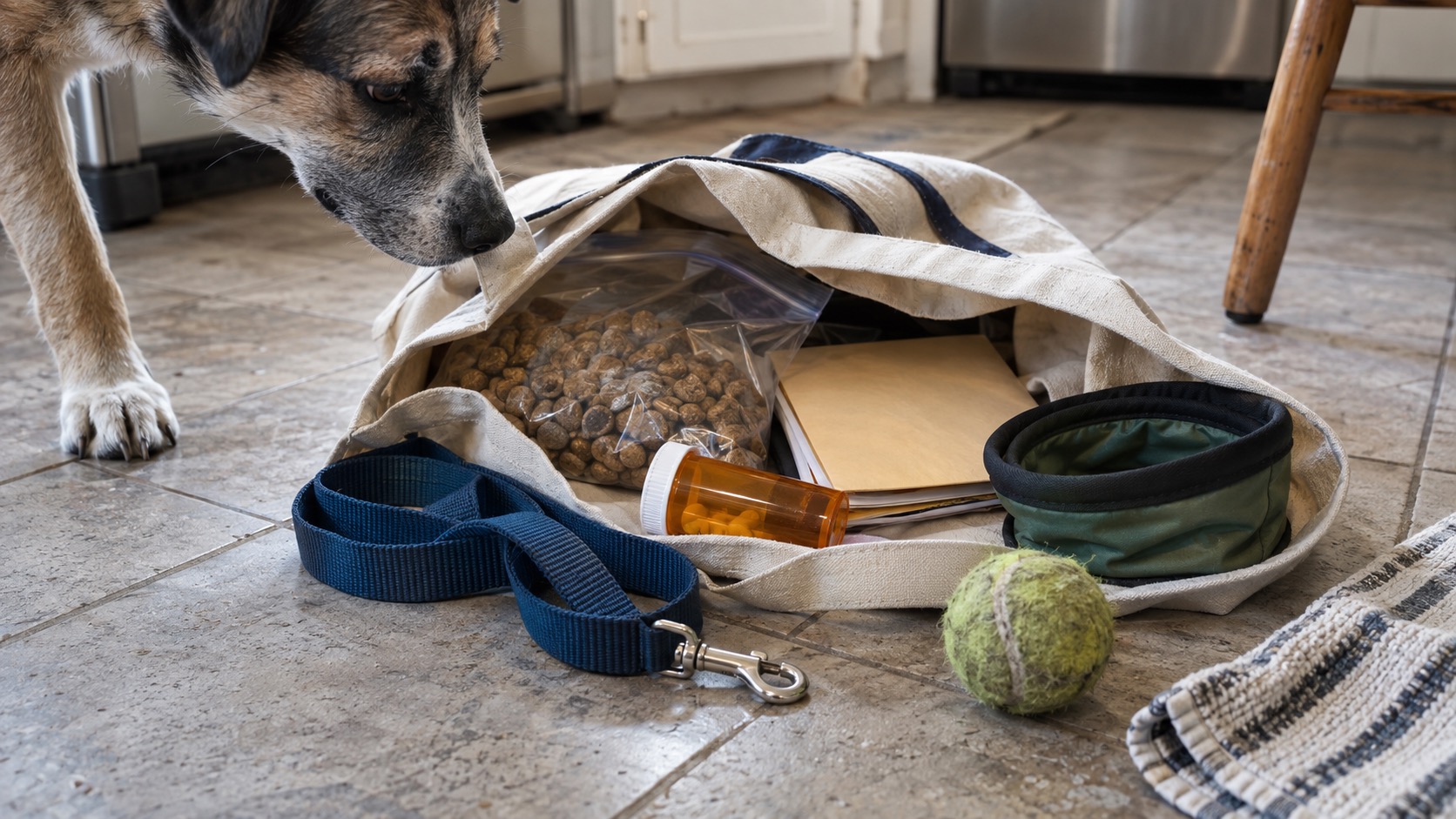
OC Animal Care's own disaster guidance is to keep "a go bag for each pet that includes vaccination and other important medical records, medications, food, and essential supplies." The specifics that make the difference:
- Printed vaccination and medical records, in a sealed envelope. Phone batteries die and vet portals need a signal. If you're unsure what your dog's records should show, our dog boarding vaccine requirements guide covers the standard list.
- Two weeks of medication, rotated so it doesn't expire in the bag.
- Food your dog already eats, sealed, plus a collapsible bowl and water. An evacuation is the worst possible week for a diet change.
- A spare leash and tagged collar — separate from the ones by the door, because those will be on the dog.
- A printed photo of you with your dog. The one people skip. If you're separated, it's proof of ownership that doesn't depend on a charged phone.
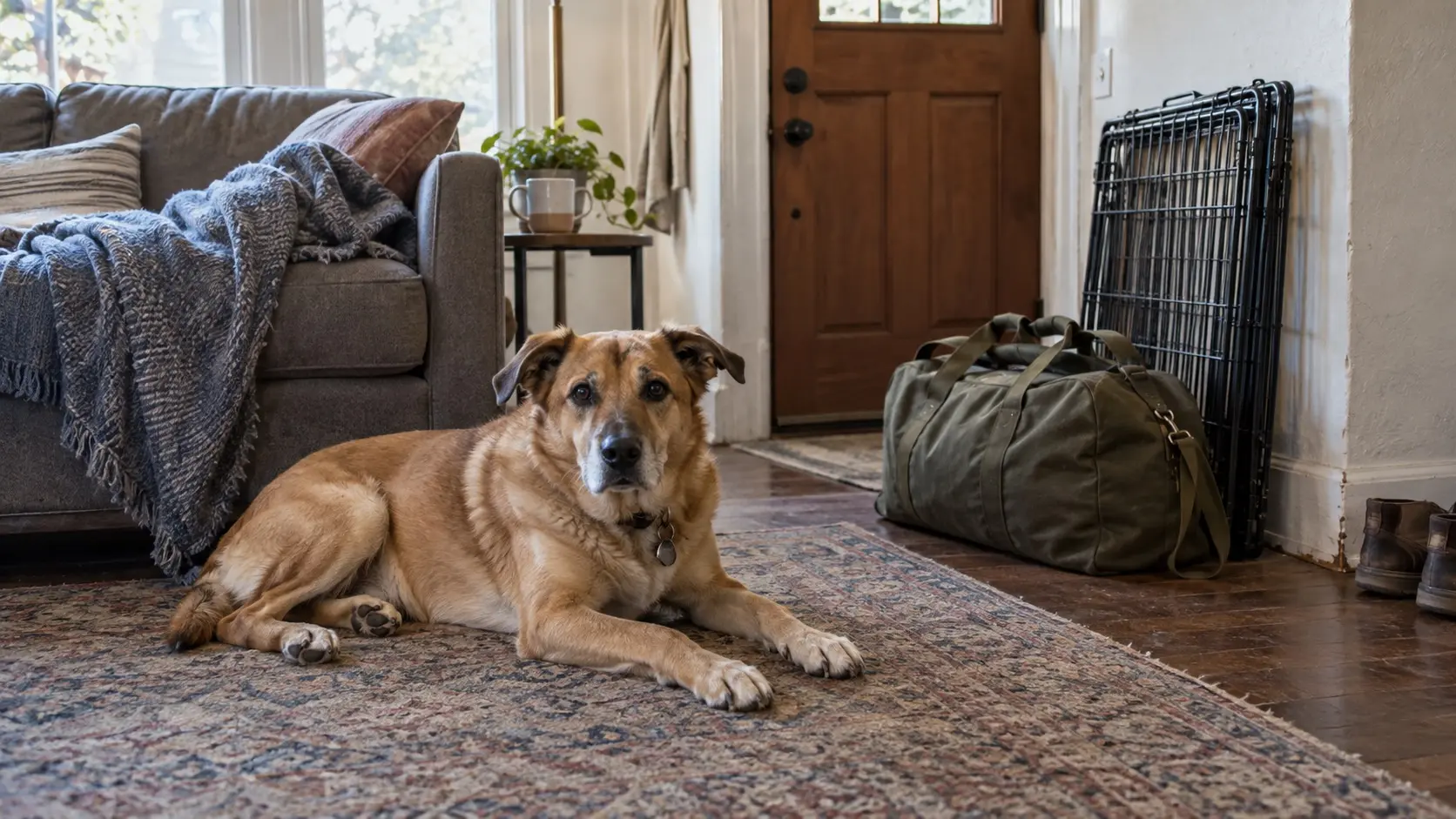
- A crate your dog is comfortable in. OC Animal Care specifically recommends making sure pets "are trained to enter a crate or cage comfortably" — a dog who has never been crated will not learn during an evacuation.
- Waste bags, a towel, and one familiar toy or blanket.
The identification half is where most plans quietly fail. A microchip is only as good as the registry behind it, and registries go stale — people move, change carriers, and never update the record. Log into your chip registry this month and confirm the phone number on file is the one in your pocket. Then put a physical tag on the collar with that same number, because a found dog in a stranger's yard gets home faster from a tag than from a chip scanner they don't have.
Get the Alert Before Your Neighbor Texts You
Orange County's mass notification system is AlertOC. Registering takes about two minutes at AlertOC.gov, or you can text AlertOC to 888777. It sends evacuation warnings and orders to your phone, and you can register more than one address — worth doing if your dog spends days somewhere other than your house. ReadyOC is the companion preparedness site, with checklists and family-plan templates.
Know the difference between the two messages you might get, because it determines what you do with the dog:
- Evacuation warning (voluntary): leave now if you have animals, mobility needs, or a trailer. This is the window where a dog loads calmly.
- Evacuation order (mandatory): leave immediately. OC Animal Care's guidance is blunt — evacuate with your pets, because the emergency may prevent responders from re-entering the area for them.
The Part of a Pet Evacuation Plan Nobody Decides in Advance
Where does the dog actually sleep that night? This is the gap.
Most American Red Cross shelters cannot accept pets for health and safety reasons; service animals assisting people with disabilities are the exception. In large California incidents the Red Cross works with animal welfare partners so pets are sheltered nearby — but "nearby" can mean a different address than the one you're at. Their own recommendation is to know in advance which friends, relatives, boarding providers, or veterinarians could take your animal.
In Orange County, the standing resources are:
- OC Animal Care, 1630 Victory Road, Tustin — (714) 935-6848, with an after-hours field services line at (714) 259-1122. It accepts dogs, cats, and small pets.
- OCART, the OC Animal Response Team, which works with the county on evacuation and temporary sheltering for horses and livestock.
- County directory assistance at 855-886-5400.
Emergency shelter sites open per incident and change from fire to fire, so treat any address in an older article as a starting point, not a plan — the live list comes through AlertOC during the event. What you decide in advance is the category: a friend inland, a relative in another county, a boarding provider you already know. Then write down two driving routes out of your neighborhood, because the obvious one is the one that closes.
When the Fire Starts and You're Not Home
Fire season overlaps with fall travel, which produces the scenario nobody plans for: the dog is with someone else when the alert goes out.
Whoever has your dog that week — a facility, a neighbor, an independent sitter — is the one making the call, so ask before you book. What would you do if an evacuation warning came through for this address? Where would you take the dog? How would you reach me if cell service is bad? None of that is an accusation; it's the same conversation you'd have about a house key.
This is where a curated marketplace earns its keep. Many platforms make it easy to find a sitter; The Blue Sock is built to make it easier to find the right one. Pet parents can compare Blue Sock sitters on Home Environment — including where in the county a sitter actually lives, which matters more in fire season than in any other month — plus Care Style, Key Skills, and the experience and specialties listed on each profile.
How the platform itself works: sitters apply to join and are curated, and all independent sitters complete a professional third-party background check before joining. Booking is request-based — you send dates and details, the sitter confirms — and a meet & greet, by video or in person, commonly happens before a first stay. That's the natural place to walk through meds, routine, and emergency contacts; our pre-boarding checklist covers what to hand over. In-app messaging keeps it all in one thread, so you're not hunting for a phone number when you need it.
For more on how Orange County's seasons shape a dog's year, see our guides to summer heat safety and coyote season, and — for the Lake Elsinore corridor — the Wildomar boarding guide.
Frequently Asked Questions
Q: When is fire season in Orange County? A: The highest-risk stretch runs roughly September through December. September and early October combine heat with the driest fuel of the year; the Santa Ana winds that arrive later in the fall are what drive the fastest-moving fires. The Airport Fire started September 9, 2024, without a wind event.
Q: Can I bring my dog to a Red Cross evacuation shelter? A: Usually not. Most Red Cross shelters cannot accept pets for health and safety reasons, though service animals assisting people with disabilities are allowed. In large California incidents the Red Cross coordinates with animal welfare partners to shelter pets nearby, sometimes at a separate site.
Q: Where do evacuated pets go in Orange County? A: OC Animal Care at 1630 Victory Road in Tustin — (714) 935-6848 — accepts dogs, cats, and small pets, and OCART handles horses and livestock. Additional emergency shelter sites open per incident, so check AlertOC or county updates during an active event rather than relying on a fixed list.
Q: What should be in a dog's evacuation go bag? A: Printed vaccination and medical records, two weeks of medication, sealed food your dog already eats, a collapsible bowl and water, a spare leash and tagged collar, a printed photo of you with your dog, a crate they're comfortable in, waste bags, a towel, and one familiar item.
Make the Plan on a Quiet Tuesday
Fire season in Orange County is predictable in timing and unpredictable in everything else. The pet evacuation plan that works is the boring one: a bag by the door, a microchip record that resolves to your current number, AlertOC on your phone, two routes out, and a decided answer to where the dog goes. An hour this week buys back the twenty minutes you won't have later.
If part of that answer is someone else caring for your dog while you travel this fall — browse sitters near you on The Blue Sock and compare care styles, home environments, and key skills before you need to. Ask about their plan at the meet & greet. Fall is when the calendar fills.
You Might Also Like
 13 min
May 26, 2026
Coyote Season in Orange County: How to Keep Your Dog Safe Through Summer
Late spring through summer is peak coyote-conflict season in Orange County. Here's where coyote activity is highest in Irvine, Costa Mesa, San Juan Capistrano, and Wildomar — and what OC dog parents can do to keep dogs safe.
Read More → 5 min
5 minAug 4, 2026
Back-to-School Dog Anxiety in Orange County: What to Do Before the First Bell in Irvine and Santa Ana
Orange County classrooms reopen between August 10 and August 18 this year, and the sudden quiet catches dogs off guard. Here's how Irvine, Santa Ana, Costa Mesa, San Juan Capistrano, and Wildomar pet parents can ease back-to-school dog anxiety before the first bell rings.
Read More → 5 min
5 minJul 18, 2026
Labor Day Dog Boarding in Orange County: Why Late-Summer Sitters Book Up Weeks Early
Labor Day weekend lands September 7 this year, and Labor Day dog boarding in Orange County fills up fast. Here's when Irvine, Costa Mesa, San Juan Capistrano, and Wildomar pet parents should reserve a sitter — and what to line up before a first stay.
Read More →